
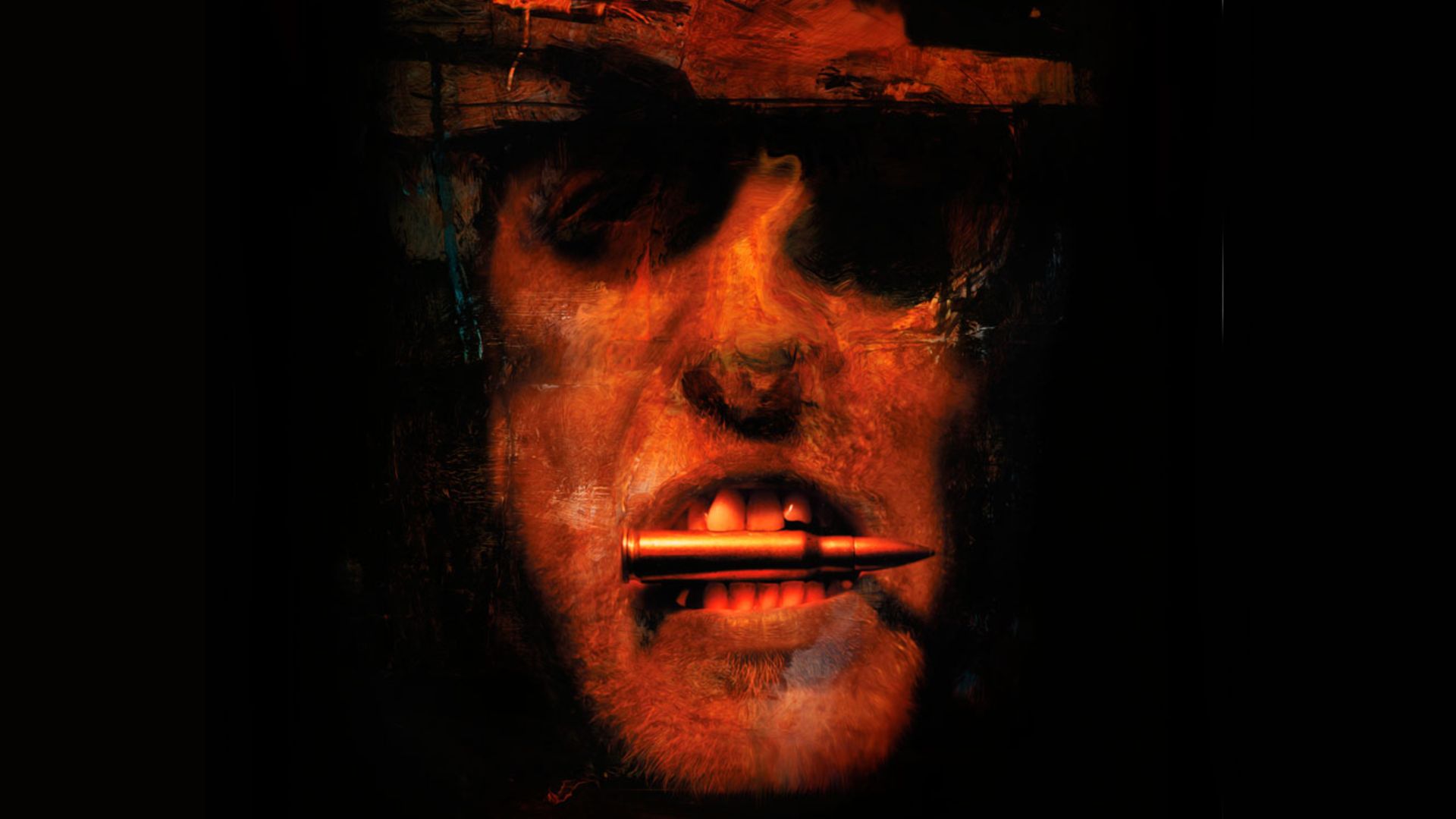
Welcome back to Inconstant Reader, the feature column that explores Stephen King’s books in the order they were published — sort of! Warning: this palaver-within-a-palaver contains spoilers, ya ken?
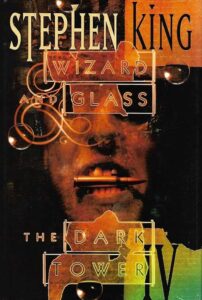
It wasn’t easy being a Dark Tower fan in the 1990s. The Waste Lands left Constant Readers with a bombshell of a record scratch in 1991, but it wouldn’t be until 1997 that the story proper continued. Stephen King hadn’t abandoned the Tower entirely in those intervening years: Insomnia, Rose Madder, Desperation, and The Regulators all served the Beam in their own way.
The Waste Lands sees Roland’s ka-tet finally come together—Eddie, Susannah, and Jake—though time and reality begin to unravel around them. The group journeys across a broken Mid-World, facing deadly trials including a malfunctioning cyborg bear and the war-torn city of Lud. Tensions between past and present grow as Jake struggles to rejoin Mid-World from 1970s New York. The novel ends with a chilling cliffhanger: the ka-tet encounters Blaine, a deranged, riddle-obsessed monorail AI with a death wish. With a hearty “fuck you” from Roland, it sets the stage for their next harrowing challenge.
Wizard and Glass is arguably one of the more divisive entries in the saga. Following the resolution of the cliffhanger, King takes a bold turn into Roland’s tragic past, spending most of the pages in an extended flashback. For some, this is a powerful deepening of Roland’s character; for others, impatient for the quest to continue, it can feel like an unwelcome detour.
Long days and pleasant nights
Despite the six years in the real world between drinks, it’s only been moments in Mid-World. Speeding toward Topeka, Kansas, or a version of it, the book opens with a tense battle of wits between Blaine the Mono and the ka-tet. The contest ends when Eddie frustrates Blaine with a nonsensical riddle, crashing them into the Topeka station.
Recognising this Kansas as one not quite their own, but rather one depopulated by a massive pandemic, the ka-tet begins their journey anew. Along the camping trail, Roland starts to tell his companions about his past.
Picking up threads from The Gunslinger, which featured only a brief flashback, Roland’s story-within-a-story takes us back to his youth in the Barony of Mejis, where he and his original ka-tet — Cuthbert and Alain — are sent undercover to investigate a threat to Gilead. There, he meets Susan Delgado, a young woman promised to a powerful local leader, and the two fall deeply in love.
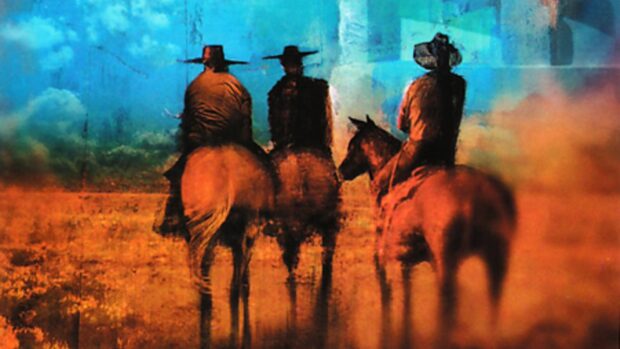
Their romance unfolds against a backdrop of political conspiracy and a clash with a sinister group known as the Big Coffin Hunters. As Roland and his friends uncover a plot involving oil, the mystical “thinny” between worlds, and the growing power of John Farson — the so-called Good Man — tragedy strikes. Susan is betrayed and executed, and Roland’s first ka-tet is irreparably wounded, setting him on the path of obsession for the Tower.
I’ll be honest: Wizard and Glass is a slog. Even on a re-read — perhaps more so — there is a lot of detail to trudge through. Shifting gears from the contemporary tones of the first three novels, most of Roland’s tale is a sweeping, romanticised western fantasy, a kingdom closer to knights and chivalry than post-apocalyptic wandering. (There are lengthy passages that are straight-up bodice-rippers, too). Whether the “side quest” structure works for Constant Readers or becomes a narrative speed bump feels irrelevant later down the trek. Just as a reading experience, I have to admit it sometimes remains a struggle, but a fascinating one nonetheless.
Destiny, obsession and loss
Ka, as we’re reminded repeatedly, is a wheel. This central concept of the cyclical nature of fate, life, and death is laid bare in Wizard and Glass. Roland’s first ka-tet of Cuthbert and Alain mirrors Eddie and Susannah, planting the seeds in the reader’s mind that the links between Roland’s doomed youthful fellowship and the new one he’s building are yet to be fully played out.
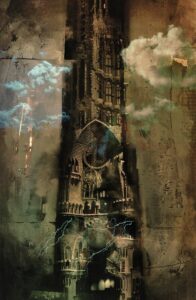
Roland’s past had been alluded to before, but here we see the entire tragic saga laid out: his clever gambit that earned him his gunslinger’s title at an early age, his confrontation with his father, and the heartbreaking fate of Susan. That he is only fourteen when these events unfold tells us so much about the Roland of our present. He is not simply an enigmatic, Clint Eastwood-inspired Man With No Name; he is a romantic tragedy, as much a pawn of ka as anybody else in the saga.
The titular wizard’s glass (or “Maerlyn’s grapefruit” for its pinkish hues), somewhat reminiscent of Tolkien’s palantír, acts as both a literal object and a symbol of seeing but never truly knowing. Like Luke Skywalker in The Empire Strikes Back, or any other hero on the archetypal journey, Roland is granted a glimpse of a possible future, and acts upon it. His obsession, borne out in his eventual quest for the Tower, seals his own fate. After all, everything’s eventual.
Not in Kansas anymore
When the story briefly picks up in the “present,” after a night that seems to stretch on forever, it’s in a Kansas that may feel eerily familiar. Newspapers talk of a super flu that ripped through the population, and graffiti warns of a “Walkin’ Dude” to look out for. This may not be exactly the same world as The Stand, but their proximity to a thinny — an interdimensional hole between worlds — suggests that the fabric between realities has begun to bleed.

Continuing these nods to other worlds, the ka-tet (and their little dog, too!) continue their journey along the Beam much like Dorothy and her companions on the road to the Emerald City in The Wizard of Oz. The parallel is no accident, as the group eventually comes across their own emerald city, with its own wizard: Marten Broadcloak, also known as Randall Flagg, the ageless Dark Man that Roland once pursued across a desert.
Flagg warns the ka-tet to abandon their quest, giving them a glimpse of Roland’s past once more through the Wizard’s Glass. The circularity of death, and the destruction that seems to follow those who travel with Roland, is compounded by the revelation of him accidentally killing his own mother, hammering home the inescapable pull of ka. While this sets up future chapters, the intertextual references do something more: they swing open yet another door, suggesting that the Dark Tower touches almost every corner of King’s entire bibliography.
Reflections in a wizard’s glass
Wizard and Glass deepens the saga not just by adding tragic weight to Roland’s story, but by elevating the importance of the ka-tet as an entity. As the book closes, the new ka-tet moves on from the emerald city and its illusions (and allusions), bringing both the group and the reader back onto the Beam with a new set of goggles. Is this quest for the Tower truly worth so much death? Or is Roland simply wedded to the idea that it requires sacrifice because he himself has lost so dearly?
“There are many possible worlds, and an infinity of doors into them…”
This volume also marks a shift toward King’s grander ambitions, setting the stage for Wolves of the Calla and beyond. If this is your first time around the wheel, you might even consider acquainting yourself with ’Salem’s Lot before pushing on.
While the saga would continue through three more novels, King never fully left Roland’s past behind. Both the novella The Little Sisters of Eluria, published between this and Wolves of the Calla, and The Wind Through the Keyhole, published after the cycle concluded, returned to explore the weight of Roland’s past losses. But that, as they say, is a story for another day.
No one ever does live happily ever after, they say — but you can find out for yourself when our journey along the Beam continues in Wolves of the Calla.