

Released 25 years ago, X-Men was the serious, streamlined leap that set the stage for a new era of superhero cinema.
A new millennium was upon us. Having survived the ravages of Y2K and The Phantom Menace, and bracing ourselves for the months-long party of the Sydney Olympics, we didn’t realise a quiet revolution was unfolding at the cinema.
Blade cracked the door open first. A year before the leather coats and athletic leaps of The Matrix, the Daywalker proved there was viability in big-screen Marvel fare some 12 years after the loveable misfire that was Howard the Duck (1986). Before Spider-Man (2002) or Iron Man (2008), Bryan Singer’s X-Men brought an entire superhero team to the big screen.
X-Men (2000) didn’t just launch a franchise — now 14 films deep and counting — it changed the rules of what a superhero film could be in the 21st century.
Early days of futures past
The 1980s and 1990s were a chaotic time for Marvel, whose licensing entanglements from that period are still being unravelled to this day.
Development on X-Men began as early as 1983, passing through the hands of multiple studios, writers, and directors — including James Cameron, Kathryn Bigelow, and Michael Chabon — before landing at 20th Century Fox in the mid-’90s.

Spurred by the success of X-Men: The Animated Series (1992-1997), producer Lauren Shuler Donner and ultimately director Bryan Singer shepherded the project through years of rewrites and budget cuts. Key characters and scenes were dropped, but the film retained its core themes of prejudice and identity.
With a final script credited to David Hayter, X-Men was released in July 2000.
What happens to toads when struck by lighting: X-Men’s compact storytelling
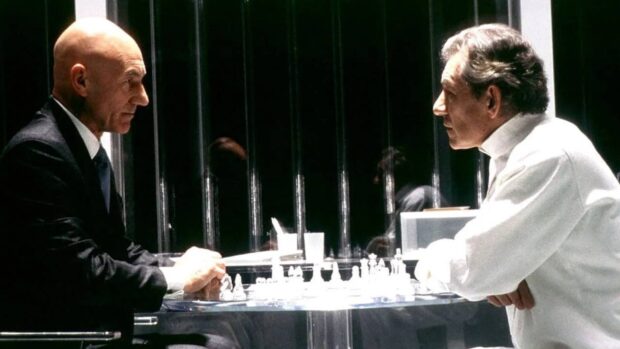
At just 104 minutes, X-Men introduces an entire mutant world, defines the ideological conflict between Professor X (Patrick Stewart) and Magneto (Ian McKellen), and still finds time for a blockbuster finale at the Statue of Liberty. It’s a phenomenally streamlined piece of storytelling, especially when compared to the bloated excesses that would define the decade’s blockbusters.
Hayter’s script strikingly opens in 1944 Poland, where a young Erik Lehnsherr bends a metal gate as he’s torn from his parents at Auschwitz. It’s a powerful opening that signals the film won’t shy away from the comics’ deeper themes of persecution and otherness. That allegory continues into the near future, with Senator Kelly (Bruce Davison) pushing the Mutant Registration Act as Xavier and Magneto look on: two old friends with fundamentally different views on humanity.
After discovering her dangerous powers, Rogue (Anna Paquin) runs away and crosses paths with Wolverine (Hugh Jackman). The two are brought into Xavier’s circle — including Storm (Halle Berry), Jean Grey (Famke Janssen), and Cyclops (James Marsden) — just as Magneto and his Brotherhood plot to use Rogue in a machine designed to forcefully mutate the world’s leaders. In the climactic battle atop the Statue of Liberty, Wolverine risks his life to save Rogue and stop Magneto. The film ends with Magneto imprisoned. At least for now.
Early drafts of X-Men were far more ambitious, featuring Beast, Nightcrawler, Pyro, Sentinels, and plots ranging from Magneto causing Chernobyl to turning Manhattan into a mutant homeland. But budget cuts forced the filmmakers to focus the narrative. The result is a tighter, more emotionally resonant film, one that foregrounds character and theme, and lays the groundwork for a sprawling franchise without wasting a moment of screen time.
The 2000-ness of it all
One thing that struck me on a recent rewatch was just how 2000 this all feels. Yes, that’s obvious given its release date, but it’s still surprising how much of the era is baked into every frame.
The X-Men don’t generally feel anchored to a single moment in time. Their ongoing comic book adventures stretch back to the 1960s, carry heavy ‘80s and ‘90s nostalgia, and now sit within a film franchise that’s spanned two decades and over a dozen follow-ups. It feels almost ever-present.
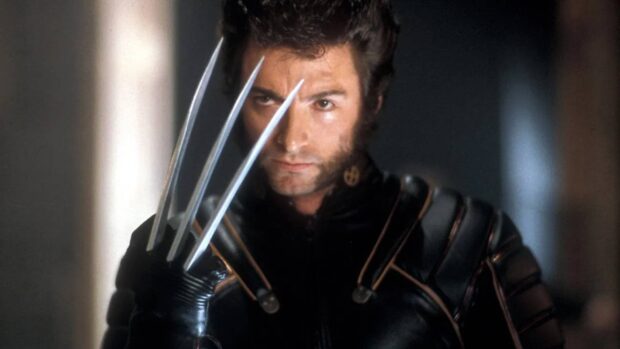
And yet, looking back, it’s undeniably a product of its moment, with that turn-of-the-millennium CGI, a slightly self-conscious edge of camp, and a soundtrack that lands somewhere between Michael Kamen’s orchestral vision and concessions to electronic music of the day. Even the plain black leather outfits were the antithesis of the perceived camp of Batman & Robin (1997). This “not-too-distant-future” now feels charmingly quaint and maybe even a little restrained.
In an age where superheroes routinely battle to save the entire multiverse, there’s something retroactively refreshing about X-Men’s relatively grounded finale. No collapsing cities, no world-ending stakes, just Magneto and Xavier, quietly debating ideology over a chessboard.
We are the future, Charles, not them!
Here in the actual future of 2025, X-Men’s core premise is more relevant than ever. From its inception, the franchise has carried powerful allegories — queer identity, outsider status, chosen families, immigrant experience — embedded into the DNA of Stan Lee and Jack Kirby’s creations.
The sequels explored these themes even more directly, especially X2 (2003), through the likes of outsider Nightcrawler’s faith, Stryker and his weaponised son, Iceman’s “coming out” to his family, and Magneto’s increasingly radical stance.
“Whole families destroyed, simply because they were born different from those in power. “
– Magneto


“Mankind is not evil, just…
uninformed.”
– Professor Charles Xavier
Audiences continue to return to X-Men, both the film and the source material, because its themes evolve alongside the characters. This is a story about identity, community, and survival in a world that would rather you didn’t exist. As the political climate shifts and the cultural conversation changes, so too does the way this story resonates.
Thanks to rights issues, these particular heroes were largely kept in their own self-contained bubble — and perhaps that’s why their cinematic world was able to flourish on its own terms, free of crossover expectations or multiverse meddling.
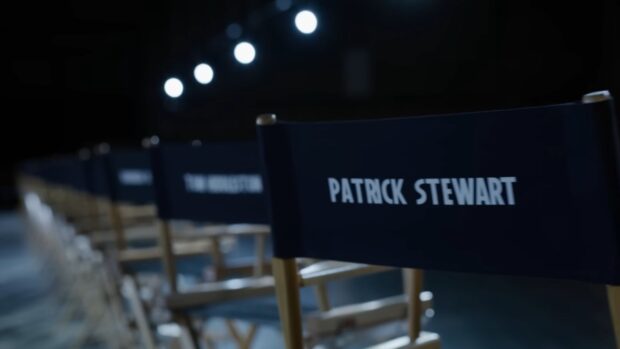
Since Disney’s acquisition of Fox, the MCU has been drip-feeding mutant teases — at least until Deadpool & Wolverine (2024) gleefully stomped all over the fourth wall. With the announcement that the original cast will return for Avengers: Doomsday (2026), that bubble has well and truly burst.
A quarter of a century on, the legacy of X-Men still looms large, a groundbreaking origin story that reshaped the box office and redefined what a superhero film could be.