
Summary
Jane Schoenbrun turns the lens back on the viewer in this funny, unnerving and very clever film that also happens to be properly scary.
Jane Schoenbrun has always explored duality in their filmmaking. From We’re All Going to the World’s Fair to the sublime I Saw the TV Glow, they use the horror genre as a kind of safer space to explore the lines between gender, queerness and genre tropes. With their latest film, Schoenbrun builds on these themes of dissociation while turning the gaze of pop culture firmly back on all of us.
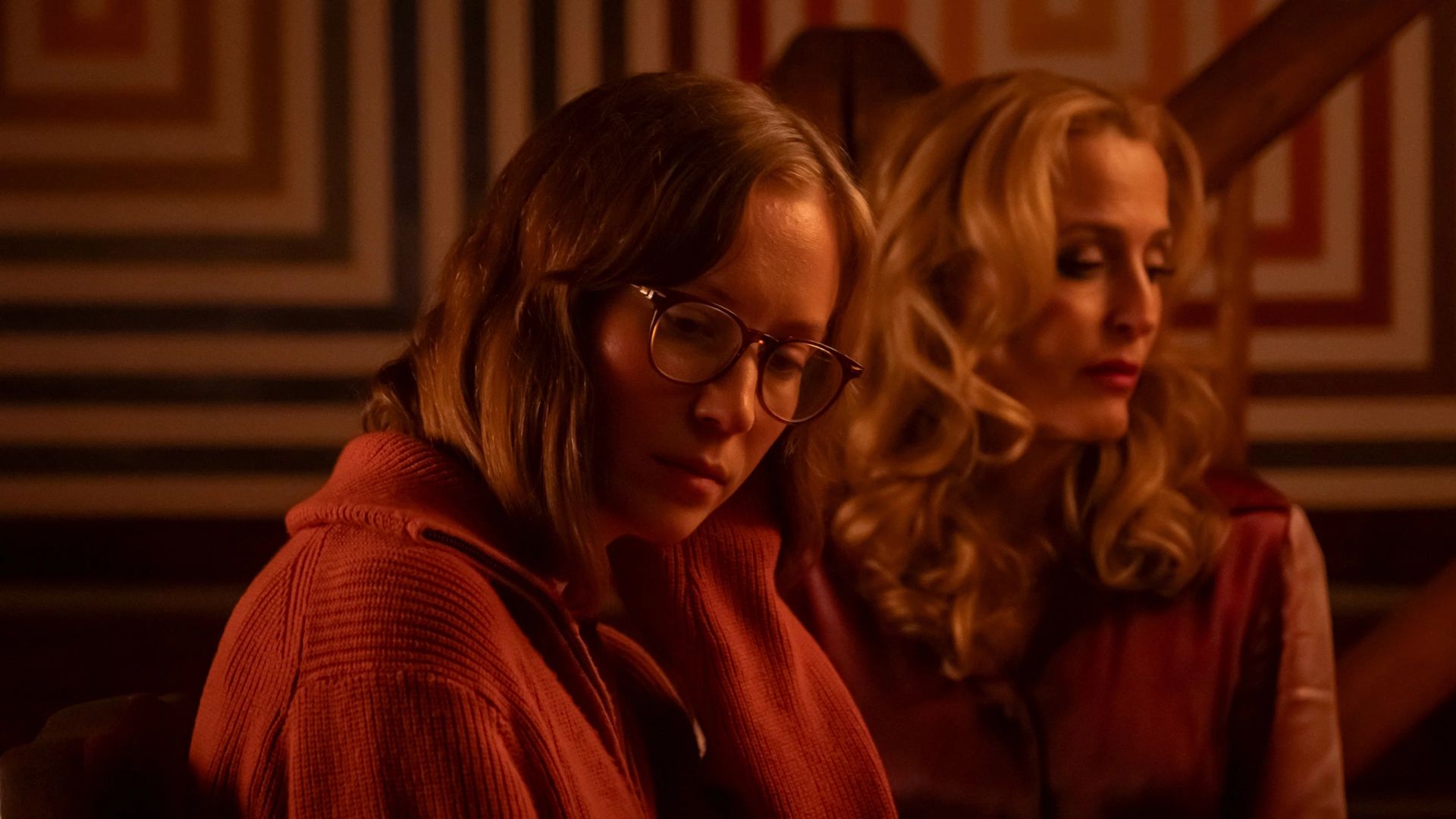
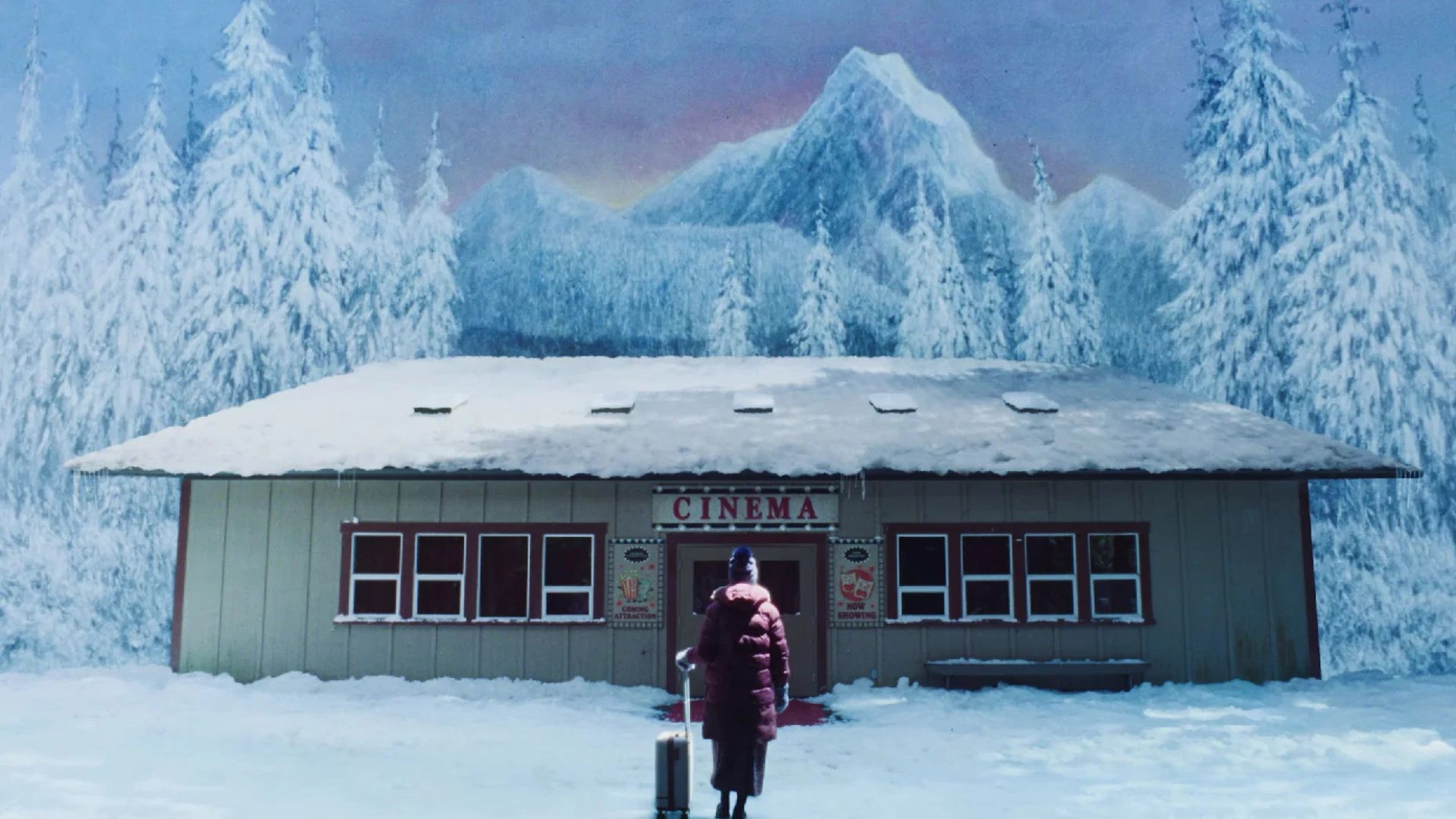
Filmmaker Kris (Hannah Einbinder) has been hired to reboot the Camp Miasma franchise, a series centred on a slasher called Little Death. Kris is convinced that the key to renewing the films is reclusive actress Billy Presley (Gillian Anderson), the ‘final girl’ who disappeared after making the first film. When she meets her at an isolated cabin in the woods, Kris is unsuspectingly drawn into a more complex story than even she could concoct.
If I Saw the TV Glow used ’90s television shows like Buffy the Vampire Slayer as its shopfront, here Schoenbrun’s fictional Camp Miasma series is very Friday the 13th-coded. The fonts, the series trajectory and even some of the story beats mirror the slasher favourites. On the surface, at least.
Through Schoenbrun’s lens, we’re forced to confront horror’s long and often problematic relationship with gender and sex. Films like Psycho (1960) and Sleepaway Camp (1983), another clear influence here, have long equated gender-nonconforming identities with monstrosity. Yet Schoenbrun’s skill has always been in doing more than simply pointing out those clichés, as one might expect from Scream (or Shaun of the Dead, at the other end of the scale). They deliver a properly scary film that also happens to be very funny, while exploring emotional numbing and dissociative detachment in sex.
Einbinder’s character is not so far removed from her award-winning Hacks turn, inasmuch as she’s a young, queer writer working within the establishment. Yet she inhabits Kris as both a figure in a psychosexual scenario and a lightly veiled avatar for Schoenbrun’s own post-transition experiences with sex. Anderson’s turn is divine, a powerful antithesis to the Norma Desmond model, speaking with a dripping Southern drawl and moving with measured, glacial gestures.
There are times when some of the celebrity cameos and metatextual references lean a little too heavily into the wink. The killer is called Little Death, a nod to the French la petite mort (“the little death”), often used as a euphemism for orgasm. Teenage Sex and Death at Camp Miasma is far more of a blunt instrument than I Saw the TV Glow, but that’s entirely appropriate for the subject matter.
Schoenbrun isn’t dissecting the complex relationships we form with cult television here, but rather a genre that has become fixated on gore and body counts. There’s also a scene where Kris is on a Zoom call with her agents and producers that I have to imagine came straight from Schoenbrun’s own experience.
There’s a point in the film when Kris is watching one of the Camp Miasma films and underlines the word “desire” in her notebook multiple times. As the film charges headlong into all of those tropes we know so well, and the lines between reality and fiction swallow each other whole, it builds towards a literal climax that fully embraces that desire. After all, it’s right there in the title.
2026 | USA | DIRECTOR: Jane Schoenbrun | WRITERS: Jane Schoenbrun | CAST: Hannah Einbinder, Gillian Anderson, Jack Haven, Patrick Fischler | DISTRIBUTOR: Mubi, Madman (Australia/NZ)| RUNNING TIME: 112 minutes | RELEASE DATE: 7 August 2026 (USA), 6 August 2026 (Australia).