
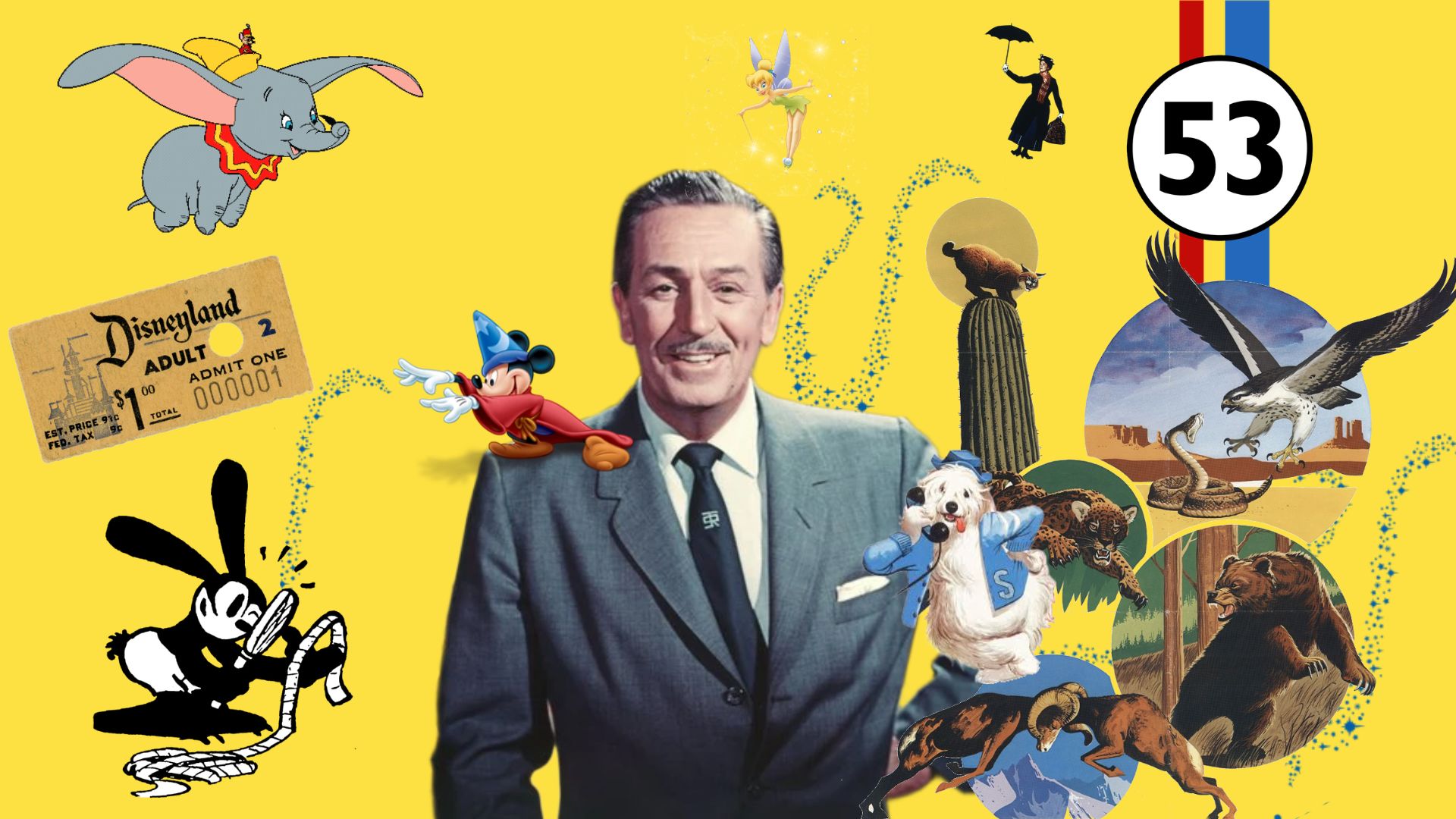
Watching every Disney film in chronological order sounded like a fun challenge. A thousand titles later, it’s become a window into film history, shifting cultural values and the remarkable evolution of an entertainment giant.

Like many misguided hobbies, it started during lockdown.
It was sometime during 2020, when the world went into isolation, that I started sorting through my collection. It turns out I had a lot of Disney. But did I have it all?
It began when I came across episodes of the TV anthology series, some of which I had on my Walt Disney Treasures DVDs. Memories of Sunday nights and the Wonderful World of Disney came flooding back.
Then I found short films on VD and menstruation. And a cartoon from 1921. I started to wonder how they all fit into the bigger Disney picture. Come to think of it, how did those earliest rough cartoons get to Snow White in just over a decade? How did the wartime propaganda shorts sit between Fantasia and Cinderella? And when Song of the South came out, how was it actually received?
There was only one way to find out: watch them all. Unlike that isolife sourdough recipe or an exercise regime, I finally found something I was going to stick with.
By the numbers
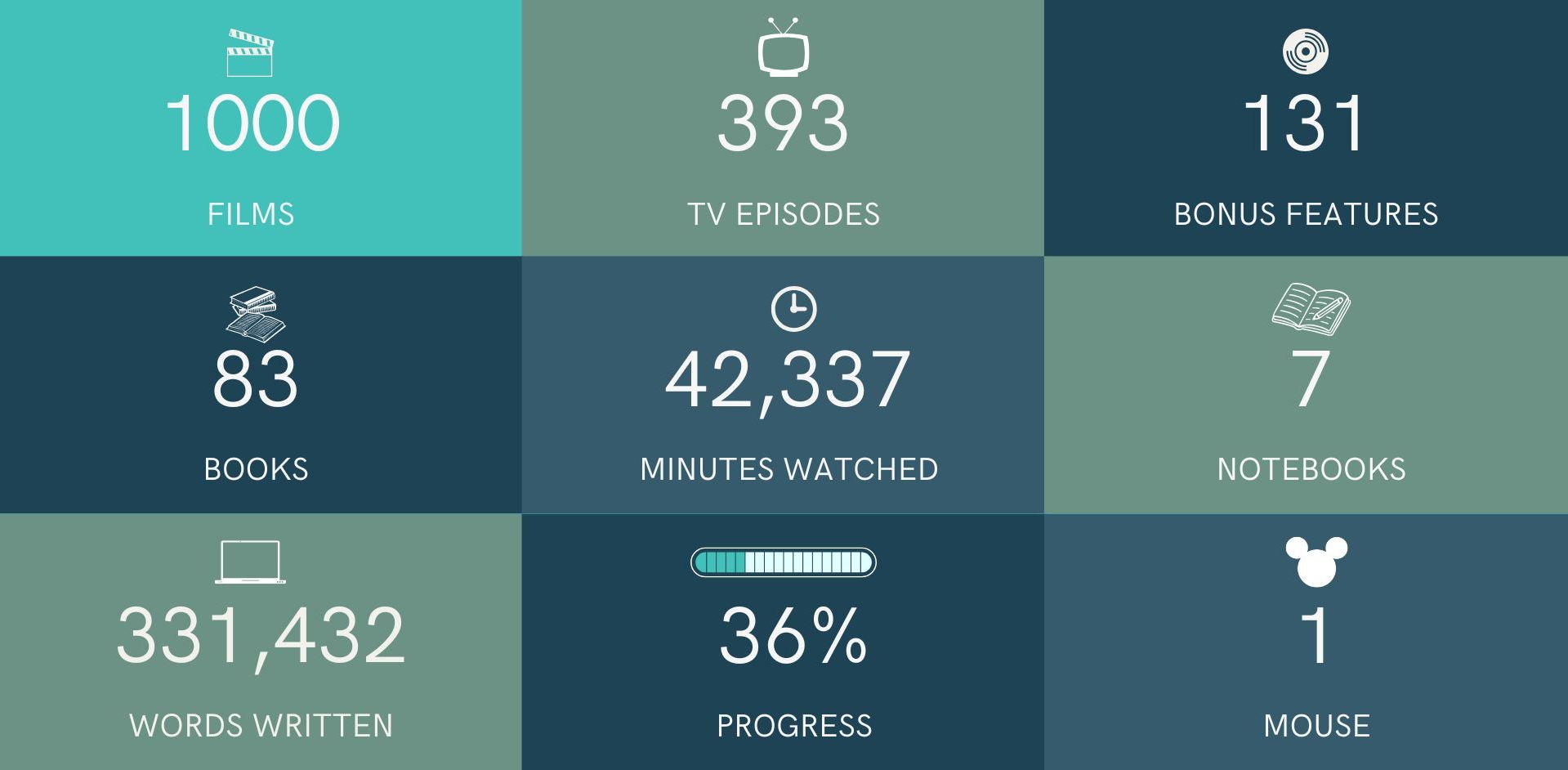
Before we get into it, let’s talk numbers. This 1000 number is based solely on the films that I was able to log on Letterboxd at the time of writing. Some films are missing from the platform. Most TV shows are not on there. Some have since been removed.
That’s shorts, animated and live action features, educational content and more from 1921 to 1974 (so far). I’ve also watched 393 TV/serial episodes. 131 documentaries. A mix of commentaries, commercials, and deleted scenes. The real total is closer to over 1585. It took 42,337 minutes or 29 days of watching to get here.
But I didn’t stop there. I also read 83 books, from production ephemera to biographies and official ‘making ofs’. I wrote about each of those films, here and on Letterboxd, with enough text to fill multiple books of my own. I even had two magazine articles published along the way.
To aid me, I compiled a list on Letterboxd of every Disney film I have come across.
What I learned
Disney is far stranger than its reputation
Today, Disney is the poster child of the cinematic monoculture. We think of their animated features. The Marvel blockbusters. The theme parks and the ships. But it wasn’t always this way.
Between the educational shorts, animal telemovies, Cold War curios, groundbreaking animation, and baffling live-action experiments, the brand is nowhere near as uniform as people assume.

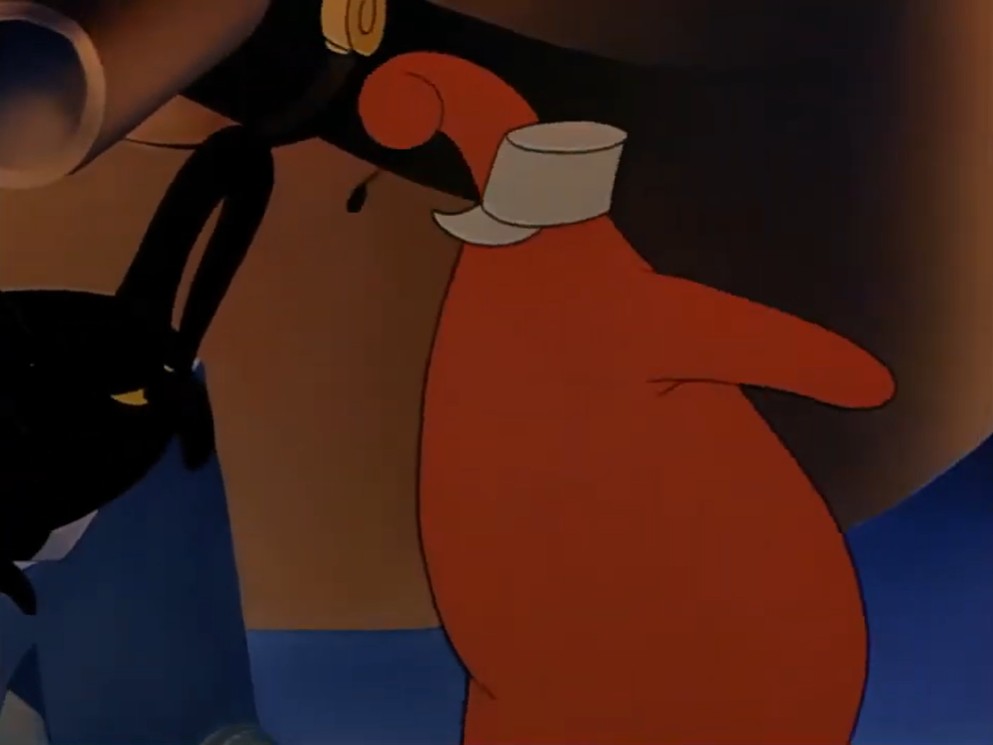
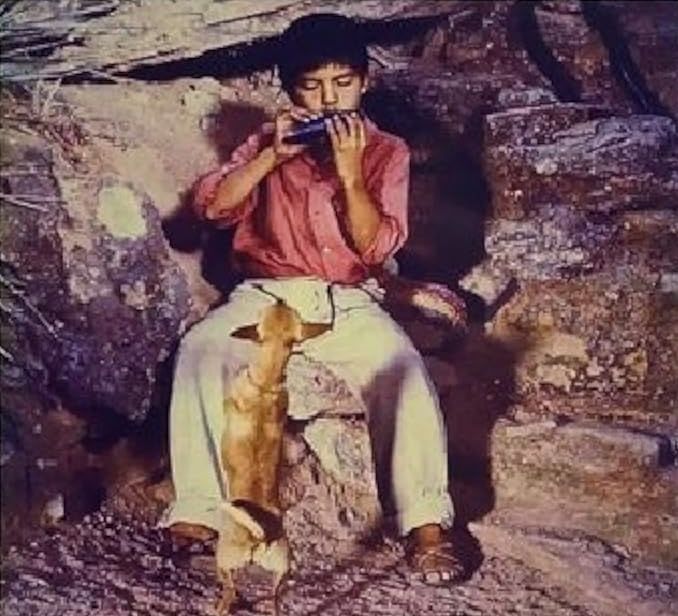
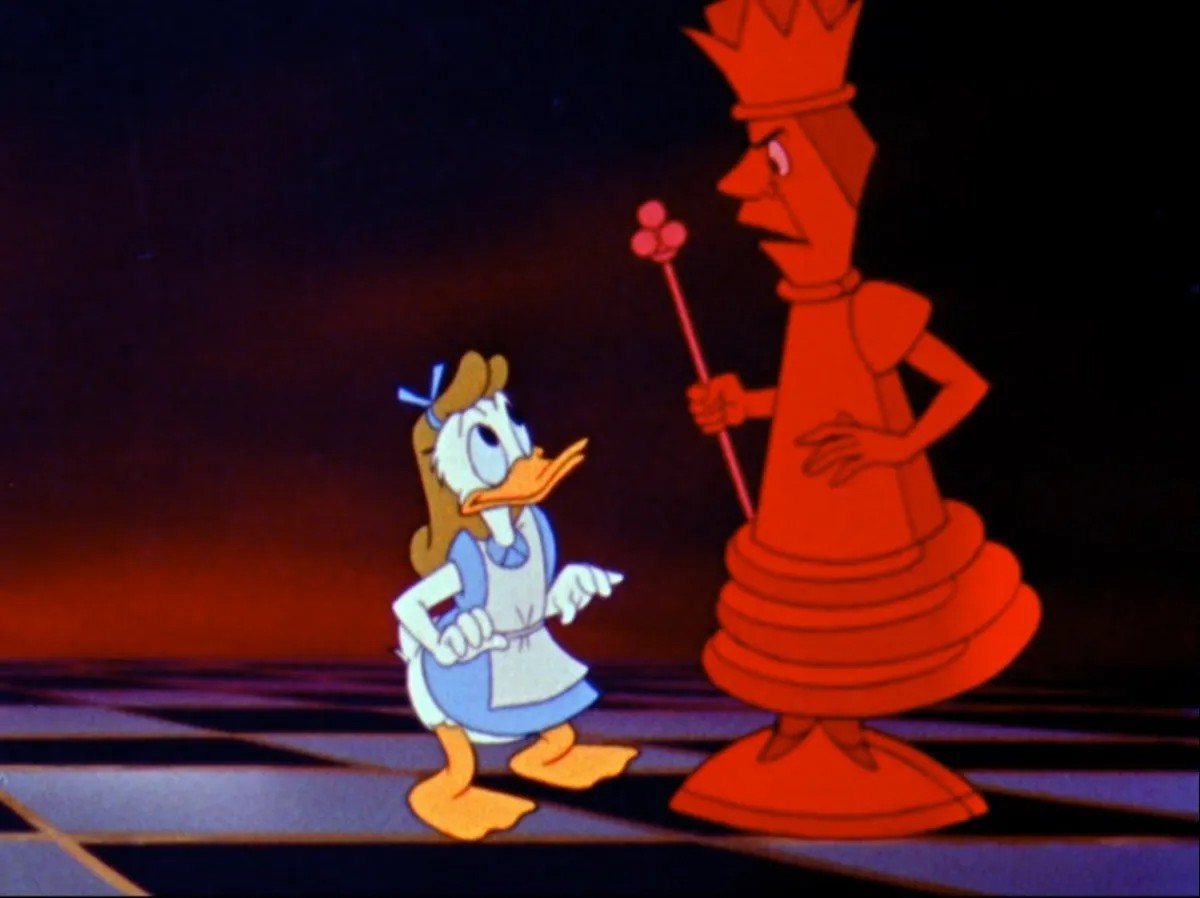
This is a studio that has experimental symphonic wonders like Music Land, Fantasia and Make Mine Music. The artistic flights of fancy in Wynken, Blynken and Nod. Vaccination education (Defense Against Invasion). Giant squid (20,000 Leagues Under the Sea). Mathematical freak-outs (Donald in Mathmagic Land). Zany monkey capers in space (Moon Pilot). There’s a TV film called Pablo and the Dancing Chihuahua.
Before the post-Walt ’70s started playing aggressively safe, I learned that the notion of a “Disney film” was a lot looser at one point than it is today.
Disney started even earlier than you think
The 100th anniversary in 2023 seems pretty definitive. Disney Studios began in 1923, after all.
But Disney started animating before that. We start our journey in 1921, on the second floor of a building in Kansas City, Missouri, with Cleaning Up!!? and the Laugh-O-Grams.
These early shorts — mostly set in Kansas — are largely single frame setups. Yet you can already see the desire to tell a whole story. Or remix a fairytale. With a makeshift camera in Walt’s garage, he and Ub Iwerks were planting seeds. As I wrote back in 2020:
Only two years later Alice’s Wonderland, the first of the Alice Comedies, was released. Six years later, Trolley Troubles, the first of the Oswald the Lucky Rabbit shorts, came out. It was seven years after the Laugh-O-Grams that game-changer Steamboat Willie introduced Mickey Mouse to the world, and it was only a few years after that that Disney was making their first all-colour animation.
So, it turns out it wasn’t all started by a mouse. Or even an unlucky rabbit.
READ MORE: Disney Minus: Newman Laugh-o-Grams
The True-Life Adventures shaped everything
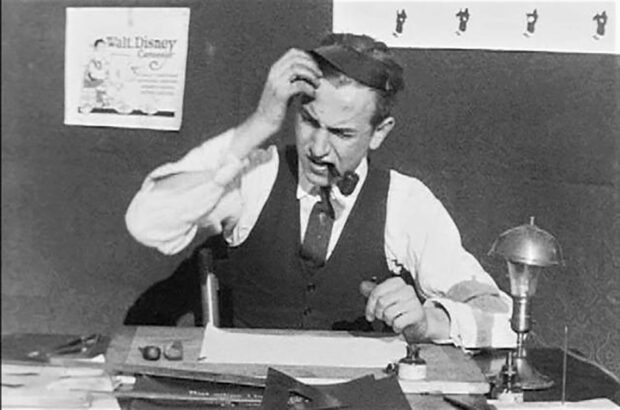
In 1948, Disney released the groundbreaking Seal Island, a nature documentary so influential that it won an Academy Award in 1949 for Best Short Subject (Two-Reel). It not only spawned the True-Life Adventure series of more than 14 shorts and features, but it set the course for quite some time.
That quasi-documentary reverence for nature bleeds into the fiction for decades. Across TV and the big screen, there were so many animal stories. Almost all cut from the same cloth: docudramas cut from the James Algar and Winston Hibler cloth. Animals lost in the wilderness. Or being offbeat in some way. Rex Allen usually narrating.
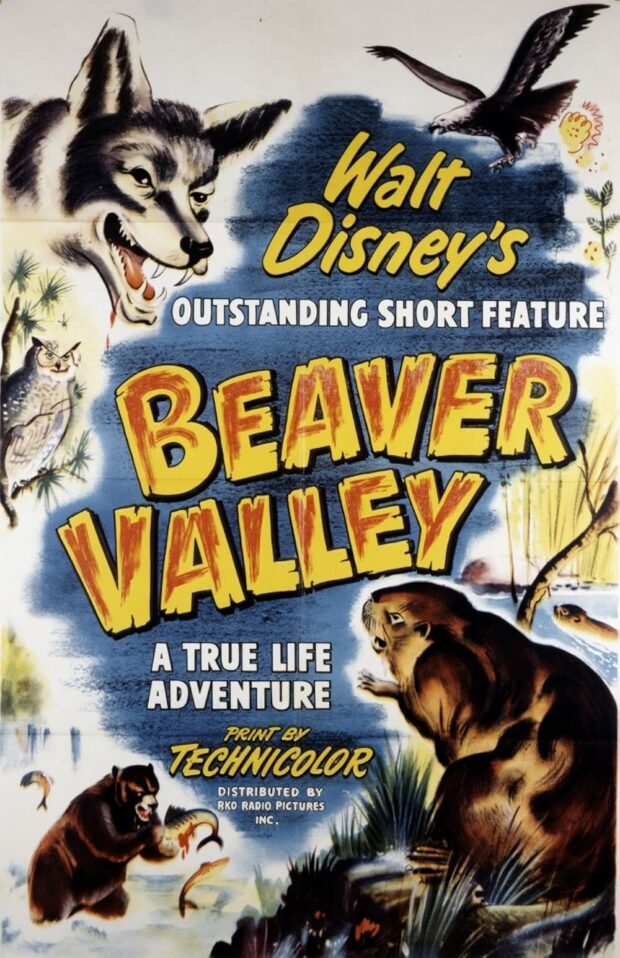
Films like Sammy the Way-Out Seal, Greta the Misfit Greyhound or Joker the Amiable Ocelot. There’s Boomerang: Dog of Many Talents, The Owl That Didn’t Give a Hoot and even Salty, the Hijacked Harbor Seal. There’s almost two dozen horse films in this period, from Stormy, the Thoroughbred (1954) through The Boy and the Bronc Buster and Mustang (both 1973). There’s five just on wandering coyote.
Disney developed a rhythm and repetition to them. They often took the form of documentary footage with a narrative voice, but later fused with fiction to form ‘true life fantasies.’ The formula was the backbone of their output in the 1950s and 1970s. If you just follow the highlights, you’d never see this emerge.
A surprising amount of Disney is lost or unavailable
Disney is notorious for vaulting releases and purposefully making some unavailable (or editing the ones the do make available). But some films are just lost.
This happens for any number of reasons – the fragility of early film, the volatility of nitrate prints, or a simple lack of care – but often films and negatives were intentionally destroyed after their initial theatrical run. Other films are just not available to the public, if they were made for commercial purposes or no longer in the Disney Archives. I’ve come across that quite a bit.
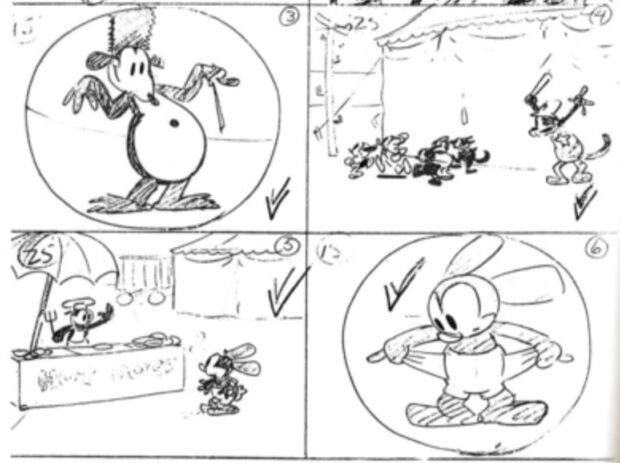
But other stuff is just officially lost. Films like Martha (1923), the entire run of eight Lafflets (1922-1923), some 16 of the Alice Comedies (1923 – 1927) and even some of the Oswald the Lucky Rabbit (1927 – 1928) are yet to be rediscovered in archives or private collections. Maybe one day!
READ MORE: Mickey’s orphans — the early lost films of Disney
Physical media is more important than ever
I could not have done this without physical media. It’s that simple.
Disney+ only has a fraction of the titles on the complete list. The early shorts in particular I largely watched via my Walt Disney Treasures DVDs.
For at least three films, I visited libraries and archives and watched 16mm prints on a Steenbeck machine. All those documentaries and commentaries? DVD and Blu-ray extras, passively collecting dust until this journey.
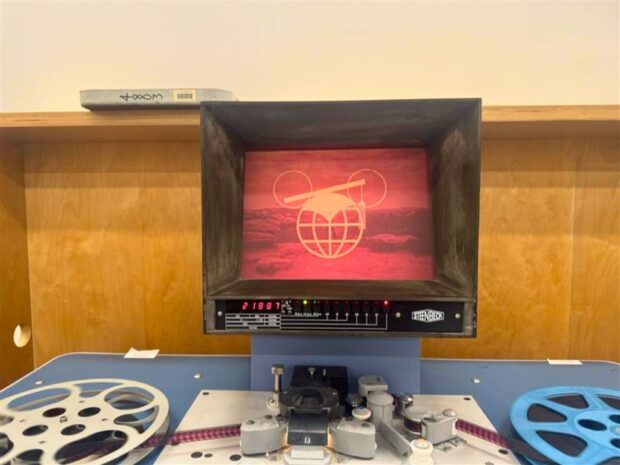
Physical media isn’t forever either. It wears like anything else. But if you look after it, it’s there when you go down rabbit holes. Even the obscure titles that turn up on YouTube or Archive.org are the result of someone digitising a VHS tape or film reel.
So, as the company has quietly pulled out of physical media for new releases in Australia, and slows down their pace internationally, their history is alive and well on tapes, DVDs, 4K Blu-rays and more. At least part of it is, anyway.
Nostalgia is selective — and curated
There was a moment in the last 103 years when Disney’s celebrations stopped being about imaginative stories and started being about Disney itself. When magic became less an idea to aspire to and more a flag-waving a brand.
It’s tempting to locate that shift in the early 2000s, when a creeping homogeneity set in and self-reference became policy rather than by-product. Yet if we look back to the grand opening of Walt Disney World in 1971, the turn reveals itself much earlier. This is the point at which the company begins moving from nostalgic entertainment to nostalgia for its own entertainment, reinforcing the idea that films were only ever part of their story.
By the time we get to the studio’s 50th anniversary celebrations in 1973, the House of Mouse was firmly solidifying much of the narrative that would define the next half-century of self-mythologising. Walt becomes the focal point of the myth, an overarching thread of ‘one man and a dream’ that often ignores the contributions of others.
The story of Disney is the story of cinema…
Walt Disney had a reputation as an innovator and a futurist. Sometimes his company jumped on trends, and at other times they led them.
Mickey Mouse famously became a sensation because his birth coincided with synchronised sound in cinema (Steamboat Willie). Disney secured exclusive rights for a time to three-strip Technicolor and from Flowers and Trees onwards, every Silly Symphony used the technique. In 1937, they released Hollywood’s first full-length animated feature, Snow White and the Seven Dwarfs.

The introduction of television saw Disney move in two directions. On the big screen, their films and short cartoons embraced CinemaScope as a means of luring people back to the cinema: 20,000 Leagues Under the Sea, Grand Canyonscope and Lady and the Tramp are just some of those that took advantage of the wider canvas. Short films Working for Peanuts and Melody (both 1953) experimented with 3D.
We see the same today with IMAX, 4DX and the emerging ScreenX, with the marketing variously calling these formats ‘enhanced’ or ‘authentic’ depending on the audience.
…but that’s only part of the story.
Walt quickly realised television wasn’t merely another place to show Disney productions; it was the key to the company’s future. Following the Christmas special One Hour in Wonderland in 1950, he saw the medium’s potential. When Disneyland debuted in 1954, it did double duty: bringing Disney into homes each week while helping finance his boldest venture yet—a theme park in Anaheim.
Walt himself became the face of the company through Disneyland (later Walt Disney Presents and The Wonderful World of Colour). He took audiences behind the scenes, previewed upcoming films and introduced original productions, something virtually unheard of for a studio head.
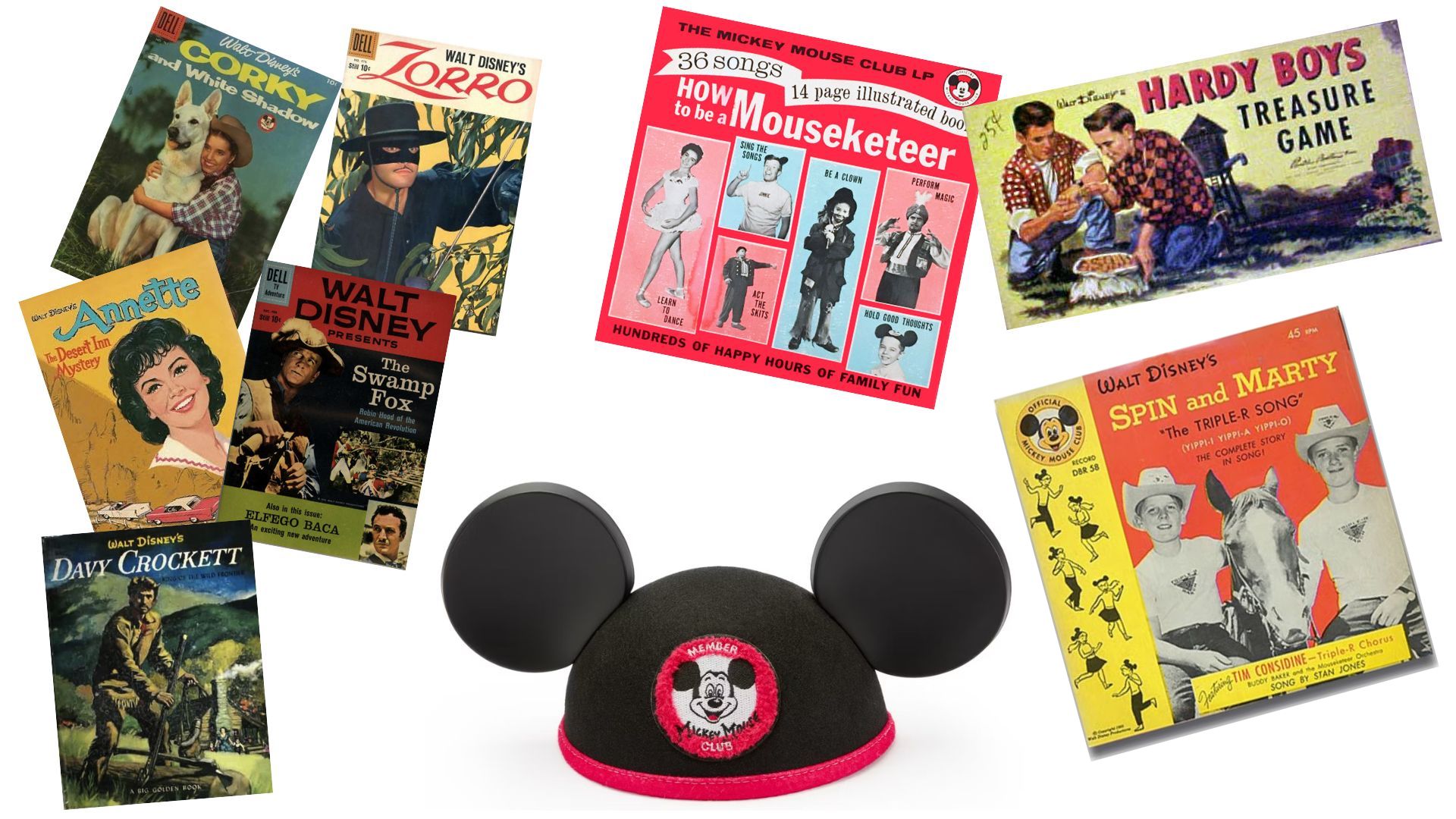
The opening of Disneyland in 1955 was followed by The Mickey Mouse Club, Zorro and serials such as Spin & Marty, Clint & Mac and The Hardy Boys. Working through them all, I found myself unexpectedly hooked. They were a whole corner of Disney history that had been a mystery box to me, but they proved essential to understanding the studio’s 1950s outlook.
Watching chronologically changes everything.
That selective nostalgia also comes from viewing “classics” in isolation. It’s easy to see the 1950s as a “Golden Age” if you just look at Cinderella, Alice in Wonderland, 20,000 Leagues Under the Sea, Lady and the Tramp, Old Yeller and Sleeping Beauty.
But it ignores the experimentation, the hits and failures and truly weird stuff in between. For every unexpected hit in Davy Crockett, there was a Corky and White Shadow. There are endless saddle-sore westerns with cultural misrepresentation just following the popular trends. So. Many. Animal. Movies. There’s The Pigeon That Worked a Miracle, about a boy seemingly able to walk again thanks to his birds.
If Disney got it wrong, they tried something new — but they were just slower to adjust than some. This was especially true in the years following Walt’s passing. Which is where I sit now, as I write this from somewhere in 1974, at a juncture of Disney trying to find its way again. I know what’s coming and how good it’s going to get. But it can be a slog too.
I still love Disney movies
You’d think I’d be sick of them by now. But here I am still watching. There are times I’ve come close to stopping, especially in the early silent days and during the deluge of the 1950s and 60s. I took a nice long break while travelling for a few months. But I keep coming back renewed, excited to discover something new to me.
If anything, I have a whole new appreciation for the craft. Disney impeccably documented their production processes, especially in their first few decades. Sometimes a lacklustre movie like The Island at the End of the World (#1009, for the record) has a better story behind the cameras than in front of it.
More than that, I discovered a community. People on Letterboxd started following along. Some joined in, some dropped out. Others commented regularly alone the way. People found the list and used it to dip in and out of.
The future
So, what’s next? At the time of writing, I’ve sailed past the #1000 mark and have started in on the second tonne. But that only means I’m about 36% of the way through — and Disney are still making movies.
So, where will I land after the next 1,000? If my rough figuring is right — and if I last that long — I should land somewhere in the late 1990s or early 2000s. I will have gone through the rise and decline of Touchstone Pictures. The addition of the Disney Channel. The Disney Renaissance. Disney is a very different company by then, and I’m looking forward to seeing how they got there.
And I’ll still only be 80% done.